Breaking the barrier
After Sachin Tendulkar blasted his way to the first ODI double-century, we cast an eye on the game's other trailblazers

| ||
Related Links | ||
The first ten-wicket haul in a Test innings
Way back in 1896, George Lohmann bagged nine wickets in the first innings against South Africa. For more than half a century no one could match that performance, until Jim Laker on a dusty pitch at Old Trafford in 1956. He snared 9 for 37 to skittle Australia out for 84 in the first innings, before delivering the perfect 10 in the second innings: 51.2-23-53-10, ensuring the Ashes remained with England. His figures of 19 for 90 remain unsurpassed even in first-class cricket.
Way back in 1896, George Lohmann bagged nine wickets in the first innings against South Africa. For more than half a century no one could match that performance, until Jim Laker on a dusty pitch at Old Trafford in 1956. He snared 9 for 37 to skittle Australia out for 84 in the first innings, before delivering the perfect 10 in the second innings: 51.2-23-53-10, ensuring the Ashes remained with England. His figures of 19 for 90 remain unsurpassed even in first-class cricket.
The first Test hat-trick
This was a feat achieved when Test cricket was in its infancy, less than two years after the first match now recognised as a Test. Australian fast bowler Frederick "The Demon" Spofforth, one of the greatest bowlers of the 19th century, capitalised on a first-day pitch affected by a spell of rain shortly after the toss to take three in three in the one-off Test at the Melbourne Cricket Ground in 1879. His burst reduced England to 26 for 7, leaving their captain, Lord Harris, to regret the decision to bat first.
This was a feat achieved when Test cricket was in its infancy, less than two years after the first match now recognised as a Test. Australian fast bowler Frederick "The Demon" Spofforth, one of the greatest bowlers of the 19th century, capitalised on a first-day pitch affected by a spell of rain shortly after the toss to take three in three in the one-off Test at the Melbourne Cricket Ground in 1879. His burst reduced England to 26 for 7, leaving their captain, Lord Harris, to regret the decision to bat first.
The first Test triple-century
Surrey opener Andy Sandham was unlucky to have played in the same era as two of England's finest openers of all time: Jack Hobbs and Herbert Sutcliffe. While that illustrious pair limited his chances at the international level, history will remember him as Test cricket's first triple-centurion. In a timeless Test against West Indies at Sabina Park in 1930, he crafted 325 as England rattled up a gargantuan 849 in the first innings. He was 40 years old at the time, and it proved to be his last Test.
Surrey opener Andy Sandham was unlucky to have played in the same era as two of England's finest openers of all time: Jack Hobbs and Herbert Sutcliffe. While that illustrious pair limited his chances at the international level, history will remember him as Test cricket's first triple-centurion. In a timeless Test against West Indies at Sabina Park in 1930, he crafted 325 as England rattled up a gargantuan 849 in the first innings. He was 40 years old at the time, and it proved to be his last Test.
The first 300 in a day
Barely three months after Sandham's glorious innings, Don Bradman joined the exclusive club of Test triple-centurions. Two weeks after he waylaid the England attack during his 254 at Lord's, Bradman continued his all-conquering 1930 Ashes tour, ransacking 309 on the first day in Headingley. He became the third batsman to make a century before lunch - the fourth consecutive Test in which he reached three digits - and added another 115 before tea. Former England captain Plum Warner's description of the bowling during the innings was: "This is like throwing stones at Gibraltar." When Bradman was dismissed for 334 the next day, the headline in an England paper, the Star, read: "He's out."
Barely three months after Sandham's glorious innings, Don Bradman joined the exclusive club of Test triple-centurions. Two weeks after he waylaid the England attack during his 254 at Lord's, Bradman continued his all-conquering 1930 Ashes tour, ransacking 309 on the first day in Headingley. He became the third batsman to make a century before lunch - the fourth consecutive Test in which he reached three digits - and added another 115 before tea. Former England captain Plum Warner's description of the bowling during the innings was: "This is like throwing stones at Gibraltar." When Bradman was dismissed for 334 the next day, the headline in an England paper, the Star, read: "He's out."
The first Test hundred before lunch
The man who embodied cricket's Golden Age was also the first to get to triple figures in the first session of a Test. Victor Trumper's genius shone brightest during the wet summer of 1902, and never more than on the first morning of the Manchester Test, when he made a blistering 104 in under two hours. By lunch, he had piloted Australia to 173 for 1 in what would prove to be one of the most topsy-turvy Tests in history.
The man who embodied cricket's Golden Age was also the first to get to triple figures in the first session of a Test. Victor Trumper's genius shone brightest during the wet summer of 1902, and never more than on the first morning of the Manchester Test, when he made a blistering 104 in under two hours. By lunch, he had piloted Australia to 173 for 1 in what would prove to be one of the most topsy-turvy Tests in history.
First to hit six sixes in an over
The game's most versatile cricketer and its greatest allrounder, Garry Sobers was the first to bludgeon 36 in an over, when captaining Nottinghamshire in a county game against Glamorgan during the 1968 season. The hapless bowler was Malcolm Nash, a seamer who was trying out left-arm spin. After four massive leg-side sixes, Sobers thought there was a chance of completing a full set. However, he was caught at long-off on the fifth, only to survive after the umpires decided, following lengthy discussions, that the fielder, Roger Davis, had landed over the rope after catching the ball. There was no doubt about the fate of the final delivery: Sobers clubbed it beyond midwicket and out of the ground.
The game's most versatile cricketer and its greatest allrounder, Garry Sobers was the first to bludgeon 36 in an over, when captaining Nottinghamshire in a county game against Glamorgan during the 1968 season. The hapless bowler was Malcolm Nash, a seamer who was trying out left-arm spin. After four massive leg-side sixes, Sobers thought there was a chance of completing a full set. However, he was caught at long-off on the fifth, only to survive after the umpires decided, following lengthy discussions, that the fielder, Roger Davis, had landed over the rope after catching the ball. There was no doubt about the fate of the final delivery: Sobers clubbed it beyond midwicket and out of the ground.
First to make 100 first-class centuries
The man who helped transform the game from a pastime to an international sport was the first to collect a century of centuries. It took WG Grace 30 years to reach the mark, but it came during one of his most prolific streaks. In his golden summer of 1895, he was on his way to becoming the first batsman to rack up 1000 runs in May, when he smashed 288 against Somerset in Bristol to spark celebrations for his 100th hundred. However, statisticians later stripped a couple of his early matches of first-class status, which meant he officially reached the milestone two weeks later, against Middlesex at Lord's.
The man who helped transform the game from a pastime to an international sport was the first to collect a century of centuries. It took WG Grace 30 years to reach the mark, but it came during one of his most prolific streaks. In his golden summer of 1895, he was on his way to becoming the first batsman to rack up 1000 runs in May, when he smashed 288 against Somerset in Bristol to spark celebrations for his 100th hundred. However, statisticians later stripped a couple of his early matches of first-class status, which meant he officially reached the milestone two weeks later, against Middlesex at Lord's.

| ||
First to 300 Test wickets
Surprisingly, the first man to this mark was a bowler who was omitted from plenty of matches due to disciplinary breaches ("I suppose swearing has cost me at least 20 Tests - that could've been another hundred wickets, couldn't it?"). Fred Trueman appeared in only 67 of the 118 Tests England played during his international career, but that was enough for one of the greatest fast bowlers to bulldoze his way to 307 wickets, passing 300 at The Oval Test of 1964. On being asked whether his record would be broken, he famously replied: "If anyone beats it, they'll be bloody tired."
Surprisingly, the first man to this mark was a bowler who was omitted from plenty of matches due to disciplinary breaches ("I suppose swearing has cost me at least 20 Tests - that could've been another hundred wickets, couldn't it?"). Fred Trueman appeared in only 67 of the 118 Tests England played during his international career, but that was enough for one of the greatest fast bowlers to bulldoze his way to 307 wickets, passing 300 at The Oval Test of 1964. On being asked whether his record would be broken, he famously replied: "If anyone beats it, they'll be bloody tired."
The first 100-mph delivery
The introduction of speed guns increased the obsession with discovering the world's fastest bowler, and Shoaib Akhtar and Brett Lee kept the debate raging by passing the 150-kph mark with regularity. The winner was decided when Shoaib broke the 100-mph barrier, clocking 161 kmph (100.04 mph) in an ODI against New Zealand in Sharjah in 2002. Not without doubt, however. The speed gun used, a US-made "Stalker" radar gun, was one operated by a sponsor; the broadcaster's own instrument for clocking speeds was out of order. Nevertheless, the fastest delivery on record till then, Jeff Thomson's 99.8 mph steamer in 1975-76, had been trumped, much to Pakistan's delight.
The introduction of speed guns increased the obsession with discovering the world's fastest bowler, and Shoaib Akhtar and Brett Lee kept the debate raging by passing the 150-kph mark with regularity. The winner was decided when Shoaib broke the 100-mph barrier, clocking 161 kmph (100.04 mph) in an ODI against New Zealand in Sharjah in 2002. Not without doubt, however. The speed gun used, a US-made "Stalker" radar gun, was one operated by a sponsor; the broadcaster's own instrument for clocking speeds was out of order. Nevertheless, the fastest delivery on record till then, Jeff Thomson's 99.8 mph steamer in 1975-76, had been trumped, much to Pakistan's delight.
The first to 100 Tests
It took 91 years since international cricket's inception to produce a player who would play 100 Tests, and Colin Cowdrey, in July 1968 against Australia at Edgbaston, set the benchmark, which 48 other cricketers have achieved since. And what better way to celebrate the effort than scoring a century, which Cowdrey did - a feat only five others have managed to achieve since. The England captain battled through pain after pulling a muscle to score 104, though poor weather blighted what had been a superior performance by the home team, which had to settle for a draw.
It took 91 years since international cricket's inception to produce a player who would play 100 Tests, and Colin Cowdrey, in July 1968 against Australia at Edgbaston, set the benchmark, which 48 other cricketers have achieved since. And what better way to celebrate the effort than scoring a century, which Cowdrey did - a feat only five others have managed to achieve since. The England captain battled through pain after pulling a muscle to score 104, though poor weather blighted what had been a superior performance by the home team, which had to settle for a draw.
The first to 10,000 Test runs
A moment to cherish for all India. In Ahmedabad against Pakistan, Sunil Gavaskar played a delicate guide off Ijaz Faqih to third man to raise his 10,000th run in Tests. The landmark was the highlight of an otherwise dull game, which made up the fourth draw of the series. Seven players have broken that barrier since, including Sachin Tendulkar, who became the highest run-getter in Tests with an almost identical shot off Peter Siddle in Mohali 21 years later. Ahmedabad was Gavaskar's penultimate Test; his final game, the next Test in Bangalore, featured one of his finest innings but ended in heartbreak for India.
A moment to cherish for all India. In Ahmedabad against Pakistan, Sunil Gavaskar played a delicate guide off Ijaz Faqih to third man to raise his 10,000th run in Tests. The landmark was the highlight of an otherwise dull game, which made up the fourth draw of the series. Seven players have broken that barrier since, including Sachin Tendulkar, who became the highest run-getter in Tests with an almost identical shot off Peter Siddle in Mohali 21 years later. Ahmedabad was Gavaskar's penultimate Test; his final game, the next Test in Bangalore, featured one of his finest innings but ended in heartbreak for India.
The first 400-plus ODI scores
How much the limited-overs game had relegated bowlers to second-class citizens became evident in a thrilling series decider in Johannesburg in 2006, when South Africa upstaged Australia's 434. The sight of two evenly matched teams engaged in a relentless battle of the bats, featuring a regular flow of boundaries and sixes, and a career-destroying 112-run bowling spell was a sign of the times. Ricky Ponting's 165, reminiscent of his murderous assault against India at the same venue in the World Cup final in 2003, was bettered by an audacious response from Herschelle Gibbs, which many believed exorcised the ghosts of the 1999 semi-final. Seven more 400-plus maulings have followed since that day.
How much the limited-overs game had relegated bowlers to second-class citizens became evident in a thrilling series decider in Johannesburg in 2006, when South Africa upstaged Australia's 434. The sight of two evenly matched teams engaged in a relentless battle of the bats, featuring a regular flow of boundaries and sixes, and a career-destroying 112-run bowling spell was a sign of the times. Ricky Ponting's 165, reminiscent of his murderous assault against India at the same venue in the World Cup final in 2003, was bettered by an audacious response from Herschelle Gibbs, which many believed exorcised the ghosts of the 1999 semi-final. Seven more 400-plus maulings have followed since that day.
The first to score 400 in Tests
Matthew Hayden was the proud owner of the record for the highest Test score for seven months, before Brian Lara reclaimed it in April 2004 against England, slamming an unbeaten 400 to add to his previous record-breaking 375 in 1994. The quadruple-century helped a struggling West Indies stave off a whitewash. Lara wasn't the first to get to 400 in all first-class cricket, though: Archie McLaren got there in 1895, cracking 424 for Lancashire against Somerset, but Lara went a level further almost a century later at Edgbaston, going past 500, for Warwickshire against Durham.
Matthew Hayden was the proud owner of the record for the highest Test score for seven months, before Brian Lara reclaimed it in April 2004 against England, slamming an unbeaten 400 to add to his previous record-breaking 375 in 1994. The quadruple-century helped a struggling West Indies stave off a whitewash. Lara wasn't the first to get to 400 in all first-class cricket, though: Archie McLaren got there in 1895, cracking 424 for Lancashire against Somerset, but Lara went a level further almost a century later at Edgbaston, going past 500, for Warwickshire against Durham.
The first double-century in ODIs
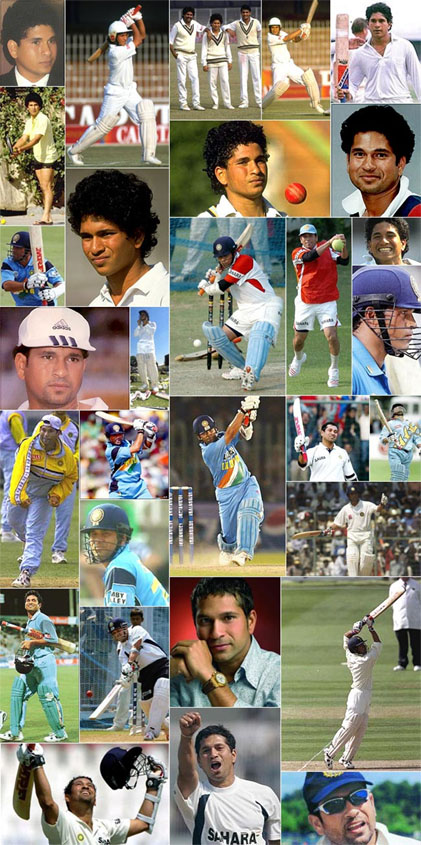
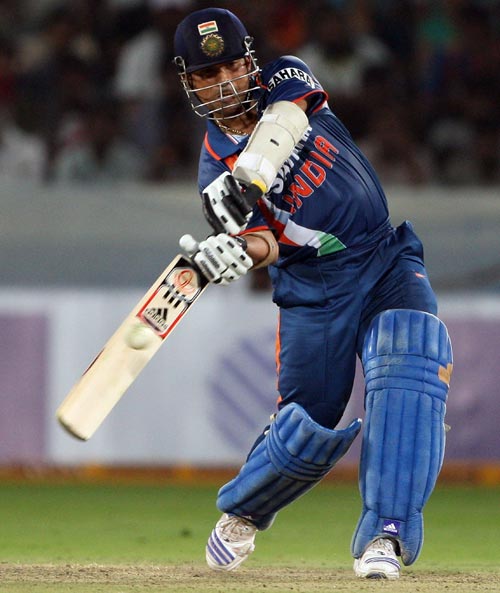
A barrier that had not been breached in 2961 one-day internationals finally fell in Gwalior in 2010, and it was fitting that the batsman with the most ODI runs became the first to touch 200 in an innings. Sachin Tendulkar, at the age of 36, drew on immense reserves of stamina, batted 50 overs, faced 147 balls and finished on 200 not out, leaving the South African attack bruised and battered. He eclipsed Saeed Anwar's 194, claiming the record of highest individual ODI score, and made 50% of India's 401. Fatigue, cramps and time have prevented players from reaching 200 before, but such was Tendulkar's speed of scoring that he got there despite facing only nine of the last 30 deliveries of the innings.
A barrier that had not been breached in 2961 one-day internationals finally fell in Gwalior in 2010, and it was fitting that the batsman with the most ODI runs became the first to touch 200 in an innings. Sachin Tendulkar, at the age of 36, drew on immense reserves of stamina, batted 50 overs, faced 147 balls and finished on 200 not out, leaving the South African attack bruised and battered. He eclipsed Saeed Anwar's 194, claiming the record of highest individual ODI score, and made 50% of India's 401. Fatigue, cramps and time have prevented players from reaching 200 before, but such was Tendulkar's speed of scoring that he got there despite facing only nine of the last 30 deliveries of the innings.
Labels: Cricket
posted by banukiran @ 3:19 AM
0 Comments